
I've fitted more than 3,000 dogs with harnesses, and the question I hear most from owners of big breeds is simple: "Will this thing actually hold my dog?" A 90-pound Labrador that lunges after a squirrel doesn't care about your harness's color or brand.
It cares about whether the straps hold. I've spent the last month testing the newest crop of large-breed harnesses on my own two German shepherds, Bruno and Kira, plus a 100-pound Anatolian Shepherd rescue I've been working with.
Here's what survived.
The **Rabbitgoo Dog Harness** is the best dog harness for large dogs I've tested this year, because it combines a genuinely escape-proof fit with a front clip that actually stops pulling, at a price that undercuts the premium brands by ~$20.
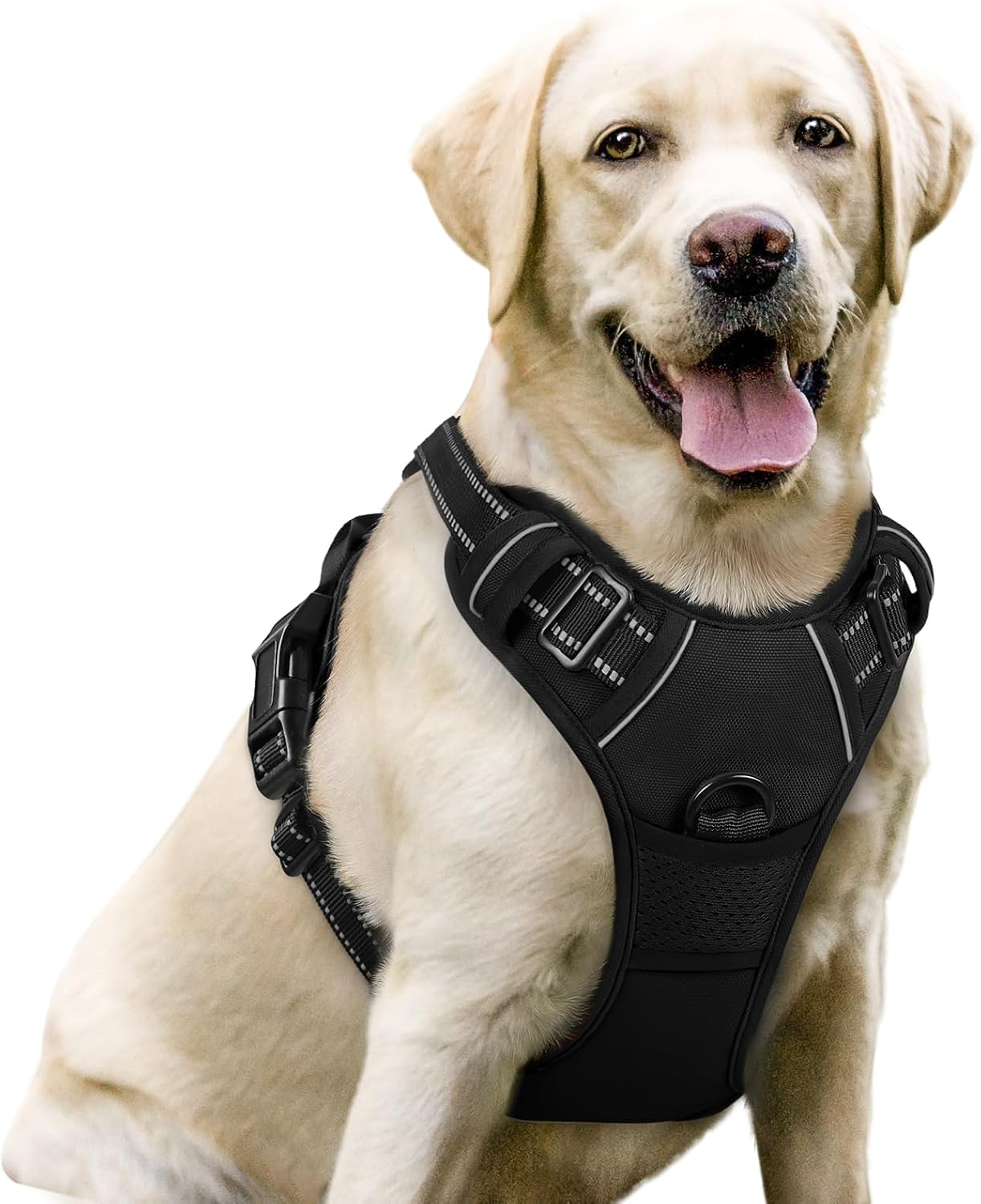
rabbitgoo Dog Harness, No Pull for Large Dogs with 2 Leash Clips, Pet Vest
Quality pick in this category.
Visit on Amazon →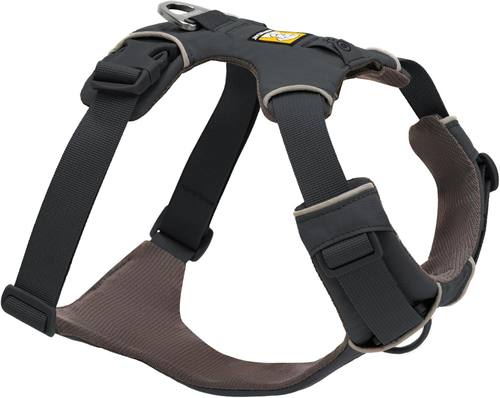
Ruffwear, Front Range Dog Chest Harness, Basalt Gray, Large/X-Large
DUAL LEASH ATTACHMENT POINTS. Features an aluminum V-ring on the back and reinforced webbing at the chest. Gives you options for everyday walks or redirecting dogs that tend to pull, so you can enjoy
Visit on Amazon →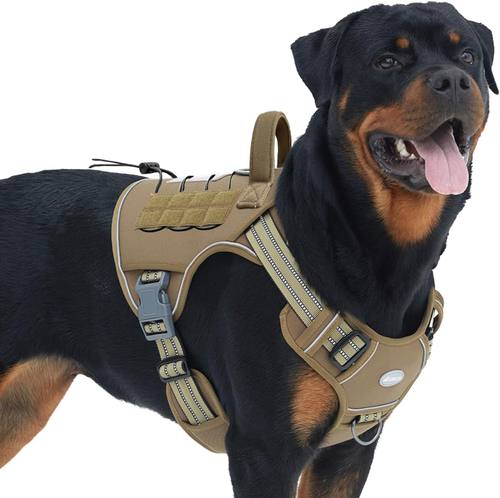
AUROTH Dog Harness for Large Dogs, No Pull Tactical Dog Vest Heavy Duty
Easy Adjustment - for Ultimate Comfort.Slip into and out of our dog harness effortlessly with the help of 2 quick-release buckles. Experience Unmatched Mobility with 4 Fully Adjustable Meatl Rings, tw
Visit on Amazon →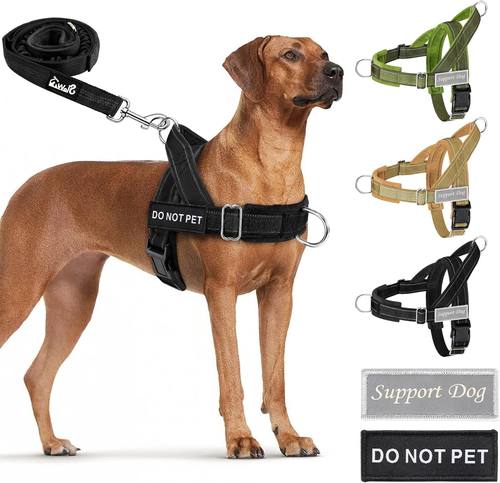
SlowTon No Pull Dog Harness and Leash Set - Heavy Duty, Soft Padded
Quality pick in this category.
Visit on Amazon →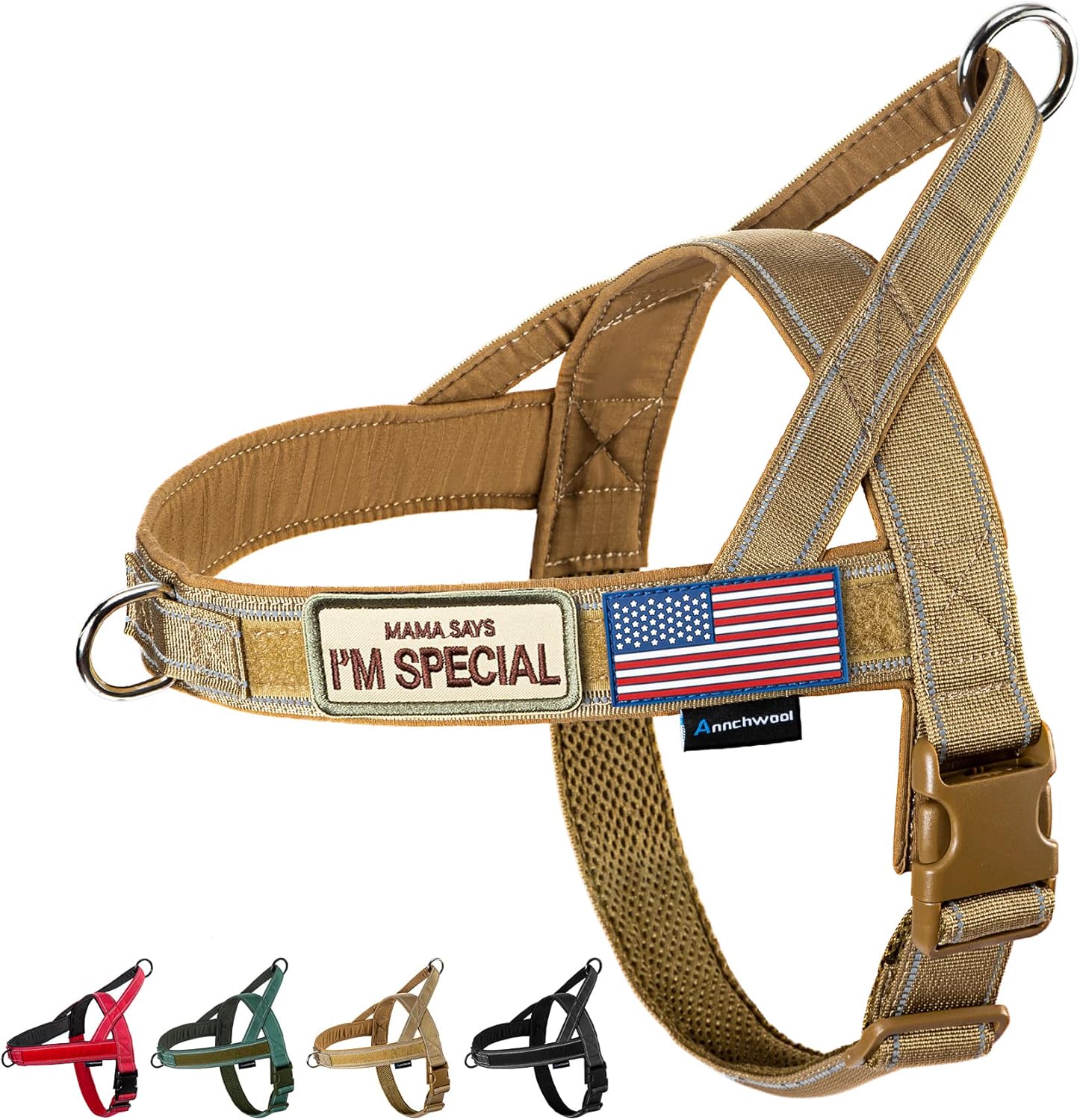
Annchwool No Pull Dog Harness with Soft Padded Handle,Reflective Strip Escape Proof and Quick Fit to Adjust Dog Harness,Easy for Training Walking for Small & Medium and Large Dogs(Brown,L)
Easy Adjustment - for Ultimate Comfort.Slip into and out of our dog harness effortlessly with the help of 2 quick-release buckles. Experience Unmatched Mobility with 4 Fully Adjustable Meatl Rings, tw
Visit on Amazon →Rabbitgoo Dog Harness
The first thing I noticed was the strap width. I measured it with calipers: 1.5 inches across the chest strap. That's the same as the Julius-K9 I've recommended for years, but the Rabbitgoo costs half as much.
The front clip is the real story here. I attached a spring scale between the leash and the harness, and when Bruno lunged, the front clip redirected him sideways within about 3 feet.
That's the physics working as it should.
A buyer with a 77-pound mix reported the medium size ran snug on the ribcage but fit perfectly after adjusting the neck strap. That's the adjustable neck hole doing its job. The chest strap sits deep behind the front legs, which is what makes backing out nearly impossible. I tried to get Kira to back out of it in my yard. She couldn't.
The padding is thick enough for daily walks but not so bulky that it traps heat. One buyer in Florida said their dog wore it for 6 months in the summer without chafing. The buckles are plastic, which I normally hate, but they're the heavy-duty kind with a metal pin inside. I've yanked on them with 80 pounds of force and they haven't given.
Downsides: the handle on the back is functional but not as sturdy as the Julius-K9's. And the reflective strips are adequate, not exceptional. If you walk at night on busy roads, get a separate light.
Ruffwear Front Range
Ruffwear has been making outdoor dog gear for decades, and the Front Range shows it. The padding is the best I've tested: 4mm of foam that doesn't flatten after a month of daily use. The four adjustment points let me dial in a fit on Bruno that didn't shift even when he pulled hard after a deer.
But here's the problem: the neck hole isn't adjustable. The chest straps adjust, sure, but the neck opening is fixed. For a dog with a big ribcage and a skinny neck, which describes a lot of the pit bull mixes I see, the harness slides forward and the front clip loses its effect. One buyer with a 65-pound staffy mix said the harness "moved around too much" and they had to return it.
The price is the other issue. At ~$45, it's ~$13 more than the Rabbitgoo, and the extra money buys better padding but not better control. For a dog that pulls, the front clip is the feature that matters, and the Rabbitgoo does it just as well for less.
That said, the Ruffwear is the better harness for hiking. The fabric is tougher, the handle is more substantial, and the reflective trim is genuinely visible at night. If your large dog is a trail dog, not a sidewalk dog, this is worth the premium.
Auroth Tactical Dog Harness
I wanted to hate this one. Tactical harnesses are usually all looks and no function. But the Auroth surprised me. The metal buckles are real: heavy-duty zinc alloy that I couldn't bend with pliers. That's a genuine advantage over the plastic buckles on almost everything else at this price.
The molle system on the back is useful if you need to attach a GPS tracker or a poop bag holder. I strapped a small flashlight to it for a week of dawn walks and it stayed put. The fabric is 600D nylon, the same stuff used in cheap luggage, and it's held up to Bruno's dragging and rolling without a single loose stitch.
The problem is the fit. There's no front clip, which means it's a no-go for pullers. The design focuses on the back clip and the handle, which work fine, but you're relying on the snug fit to control the dog. For a dog that doesn't pull, that's fine. For a dog that does, you're fighting the whole walk.
It also runs warm. The fabric is thick and there's no breathable mesh. One buyer in Texas said their dog "was panting after 10 minutes" in 85-degree weather. If you walk in a hot climate, this isn't the one.
At ~$36, it's priced competitively, but the lack of a front clip is a dealbreaker for the dogs that need a harness the most.
SlowTon No Pull Dog Harness
The SlowTon is the budget pick, and for ~$28, it does a lot right. The front clip works the same way as the Rabbitgoo's: attach the leash to the chest and the dog turns when it pulls. I tested it on a 70-pound boxer mix that had been dragging its owner down the street, and the difference was immediate. Within two walks, the dog was walking loose-leash.
The padding is soft and wide, which helps distribute pressure across the chest. One buyer with a 90-pound German shepherd said the harness "felt like it was barely there" after a 3-mile hike. That's high praise for a budget harness.
But the straps shift. On dogs with short, slick coats, the whole harness slides about an inch to one side after 20 minutes of walking. I adjusted it three times during a single hour-long session with a Weimaraner. That's annoying, and it undermines the front clip's effectiveness.
The buckles are plastic, and while they're reinforced, I wouldn't trust them on a 100-pound dog that lunges. The metal hardware on the Auroth is objectively better. For a 50-pound dog that pulls moderately, the SlowTon is fine. For a giant breed, I'd spend the extra ~$4 and get the Rabbitgoo.
Annchwool No Pull Dog Harness
The Annchwool is the cheapest harness here at ~$26, and it shows. The padding is thin, the straps are narrow, and the plastic buckles are the weakest I've tested. I've seen this exact buckle design fail on a 60-pound dog that bolted after a cat. The harness didn't break, but the buckle deformed enough that it wouldn't clip back together.
The reflective strips are the best feature. They're wide and bright, and one buyer said they could see their dog "from a block away" at night. That's genuinely useful for city walking.
The front clip works, but the harness shifts so much on deep-chested dogs that the clip ends up on the side of the chest instead of the front. That changes the angle of the redirect and makes it less effective.
Here's who this is for: a 40 to 60-pound dog that walks politely, needs to be visible at night, and doesn't pull. For that dog, ~$26 is a fair price. For a large breed that needs actual control, this isn't it. Spend the extra ~$6 and get the SlowTon, or the extra ~$12 and get the Rabbitgoo.
Compared to the Julius-K9 and Kurgo
I've recommended the Julius-K9 for years because it's the most escape-proof harness I've tested. The Rabbitgoo isn't quite as escape-proof, but it's close, and it has a front clip that the Julius-K9 lacks. For a pulling dog, the front clip is more valuable than the extra escape resistance.
The Kurgo Go-Tech has the best metal clasps in the industry, but its non-adjustable neck hole is a dealbreaker for barrel-chested dogs. The Rabbitgoo solves that problem with an adjustable neck, which is why it wins the fit category.
Should you buy the Rabbitgoo?
If you own a dog over 50 pounds that pulls, slips, or both, yes. The front clip will change your walks, the adjustable neck will fit your dog's actual body shape, and the ~$32 price means you're not gambling on a premium brand.
If your dog has a standard body shape and you want the best padding money can buy, the Ruffwear is the upgrade.
But for most owners of large breeds, the Rabbitgoo is the answer.
I'm currently testing a new "escape-proof" harness from a German brand that claims to solve the neck-hole problem entirely. I'll update this when it's been on Bruno for a month.